OLOVA logo OLOVA
Skater-Owned . Tri-Cities, BC
Project archive
Wider body of work

Not every project here is equally finished. That is part of the point.

Some are early concepts. Some were exploratory. Some were built to push the philosophy further rather than pitch a client.

That is fine. The range is part of the picture.

Zambia, Botswana, Lincoln Avenue, and older pieces sit here so the main Design page can stay focused on the strongest current work without pretending the rest is gone.

Each project had a reason for existing. Some were responses to a real brief. Some were attempts at the kind of civic integration the newer work pursues more deliberately. They are here because the thinking has been running longer than two featured projects suggest.

The through-line across most of this work is the same idea: public space designed so well, and so intentionally, that the skating disappears into the broader place. Not as a trick. As the design goal.

The archive is where you can see that idea at different stages of development.

Zilla Skatepark, Lusaka, Zambia

Concept, proposal, and visual development for a first real public skatepark.

The project was SAZ's to lead and own. The collaboration was on concept, visual development, and proposal thinking.
Zambia concept entry view showing signage, plaza, and skate terrain
ZambiaEntry sequence

The front edge matters.

Lusaka had over a hundred active skateboarders and no legal place to skate. The Skate Association of Zambia had been working for years to change that, with a site secured at the NASDEC multi-sports complex in the centre of the capital and a vision for something that could actually grow with the community around it.

Vaughan came into the project on the concept and proposal side, working with the SAZ team to think through what the space could be, how to frame it for the people who needed to get behind it, and what it would take to move from a grassroots scene making do with wooden boxes and scrapped metal to a real park with real terrain.
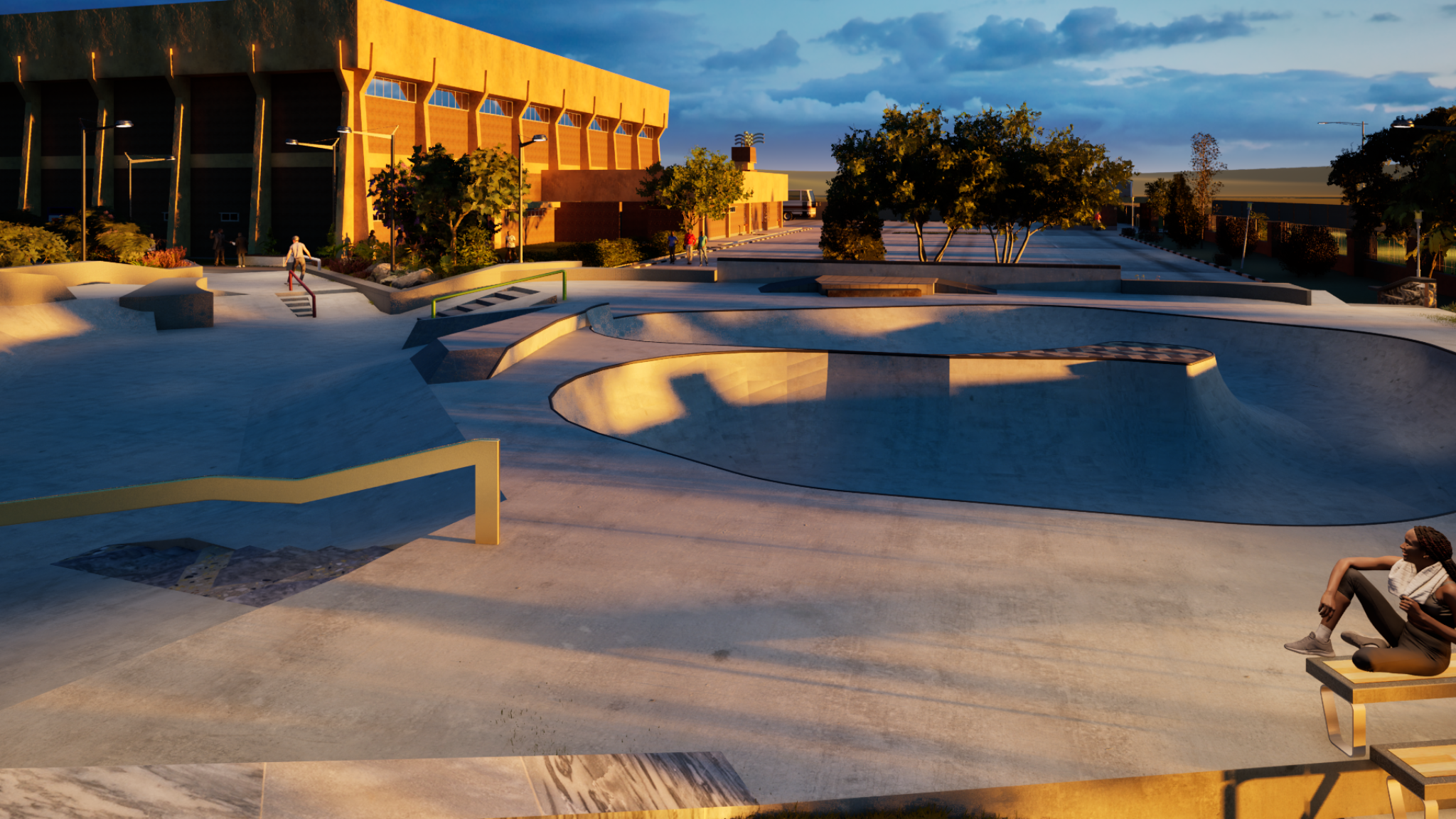
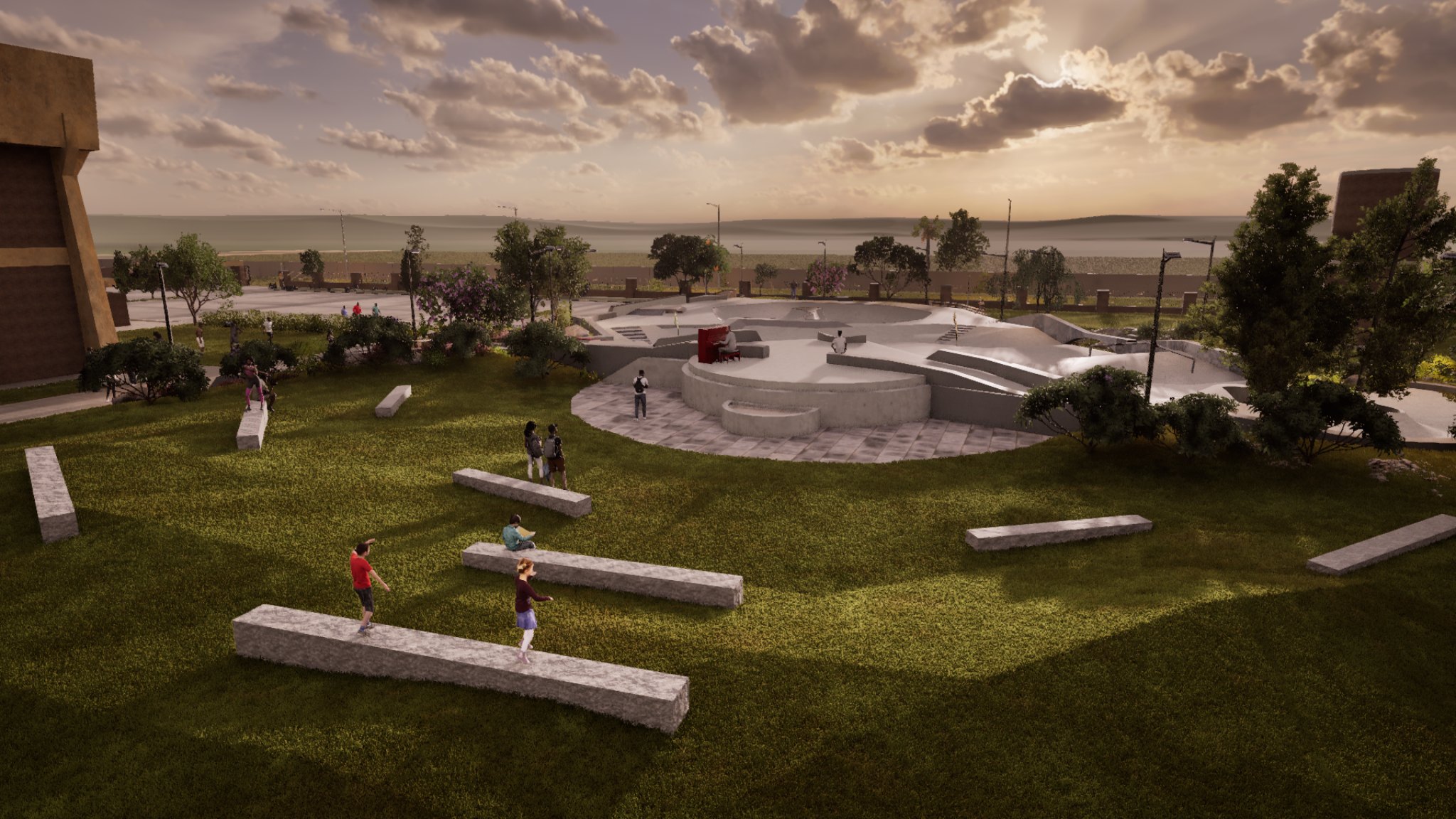
Zambia concept dusk view showing bowl and civic plaza
ZambiaDusk view

The bowl belongs to the whole place.

The design thinking aimed at a destination-level space: a flow bowl, a street plaza, programming room, public amenities, and enough scale to hold events and give the scene somewhere to grow into.

The advocacy experience and the industry connections Vaughan brought in helped translate between what the local skaters knew they needed and the language that tends to move institutions.

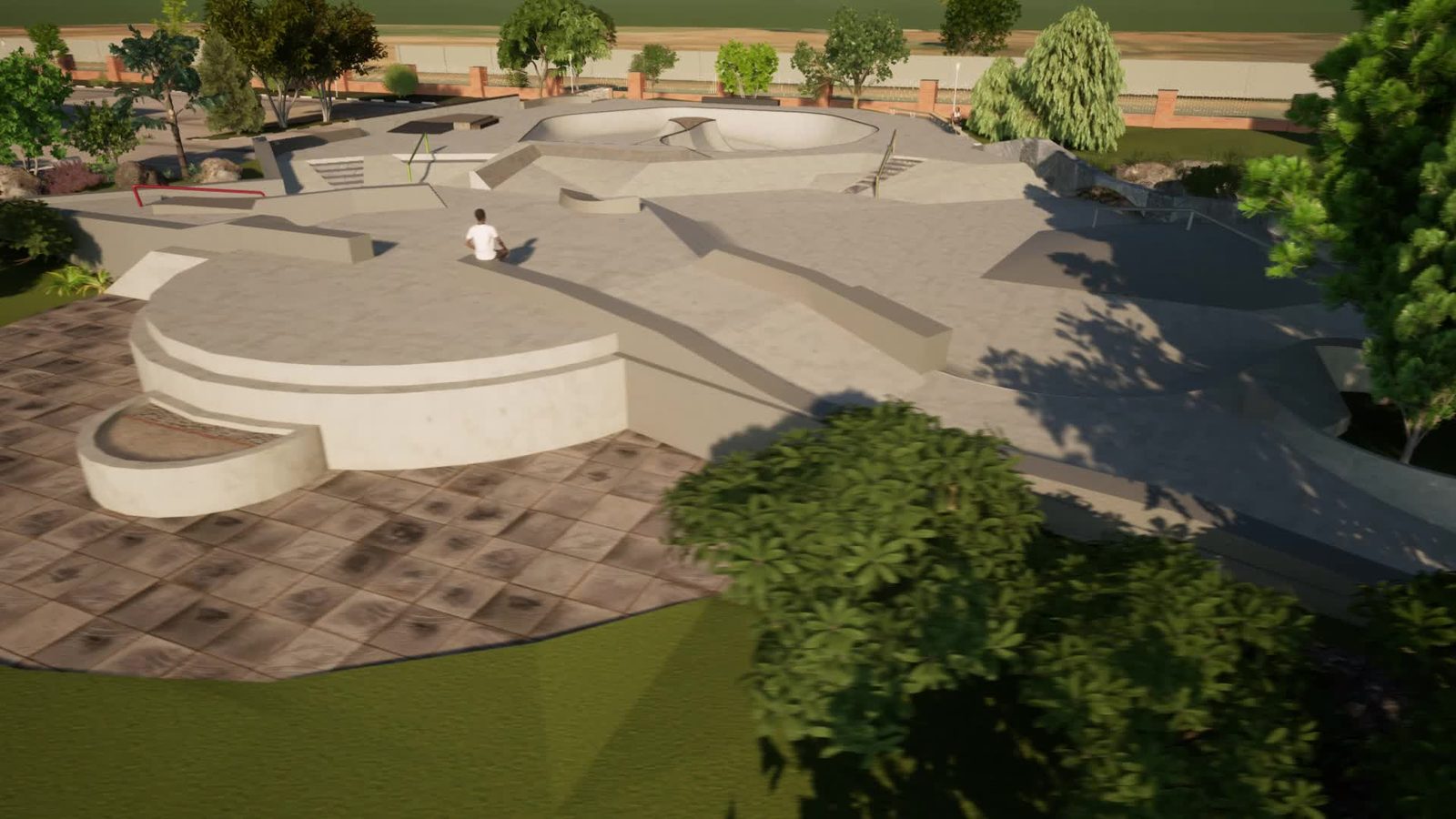
Zambia concept aerial render
ZambiaAerial still

The aerial still is still useful.

It shows the broader site logic, the spacing, and how the pieces talk to each other. That is why it still earns its place here.

The relationship continued beyond the initial proposal, because that is how these projects actually move.

Motion

The flythrough still matters.

Sometimes movement helps a project click faster than stills do. This cut keeps the larger site logic alive without turning the page into a video dump.

Lincoln Avenue Skate Spot, Port Coquitlam

A small leftover space turned into a stronger public argument.

Vaughan's role was concept and visualization. The idea came from the community. The model helped people see it.
Lincoln Avenue Port Coquitlam render 1
Lincoln AvenuePort Coquitlam

This one started with a conversation.

Dave Jonsson noticed an unused city-owned space at the end of a dead-end street near his home and saw something most people would have walked past. A leftover piece of ground that could make an argument to city hall about what small forgotten spaces are actually worth.

He asked Vaughan to build a model that could help people picture it.

Lincoln Avenue Port Coquitlam render 2
Lincoln AvenueDetail view

The skate spot was part of the answer, not the whole pitch.

The concept was not about dropping skate features into a gap and calling it done. The site included a basketball court so the space could serve more than one group, a wall to manage sound for the nearby houses, and the existing trees stayed because the shade was worth keeping.

The skating was built into the design deliberately, not treated as the only reason the space existed.

Knucklehds Skatepark, Gaborone, Botswana

Early concept support with civic and cultural intent inside it.

Local leadership led. The collaboration was real and ongoing, not a one-off render drop.
Botswana concept render
BotswanaLandscape concept

A larger civic picture.

Knucklehds started as a skateboarding collective founded by Mosako Chalashika, a skater and photographer from Botswana who had built it into something wider: youth development, urban culture, community programming. The skatepark was the next logical step.

The concept drew on local cultural references: the kgotla, the diamond ring, the stage as civic gathering form. It was thinking about the skatepark as a multi-use civic space with real cultural layering, not just a concrete pad with an obstacle layout.

Botswana concept render detail
BotswanaCivic layering

Outside-in support, local grounding.

Vaughan worked with the Knucklehds team on concept development, proposal thinking, and visual support. The collaboration brought in a western industry perspective and skate-space design thinking to work alongside what Mosako and his team were already building from inside the local culture.

The strongest design decisions came from that exchange. The usability thinking, the flow logic, and the way the space needed to hold both skate function and broader civic life all benefited from that outside-in support while the cultural grounding stayed local.

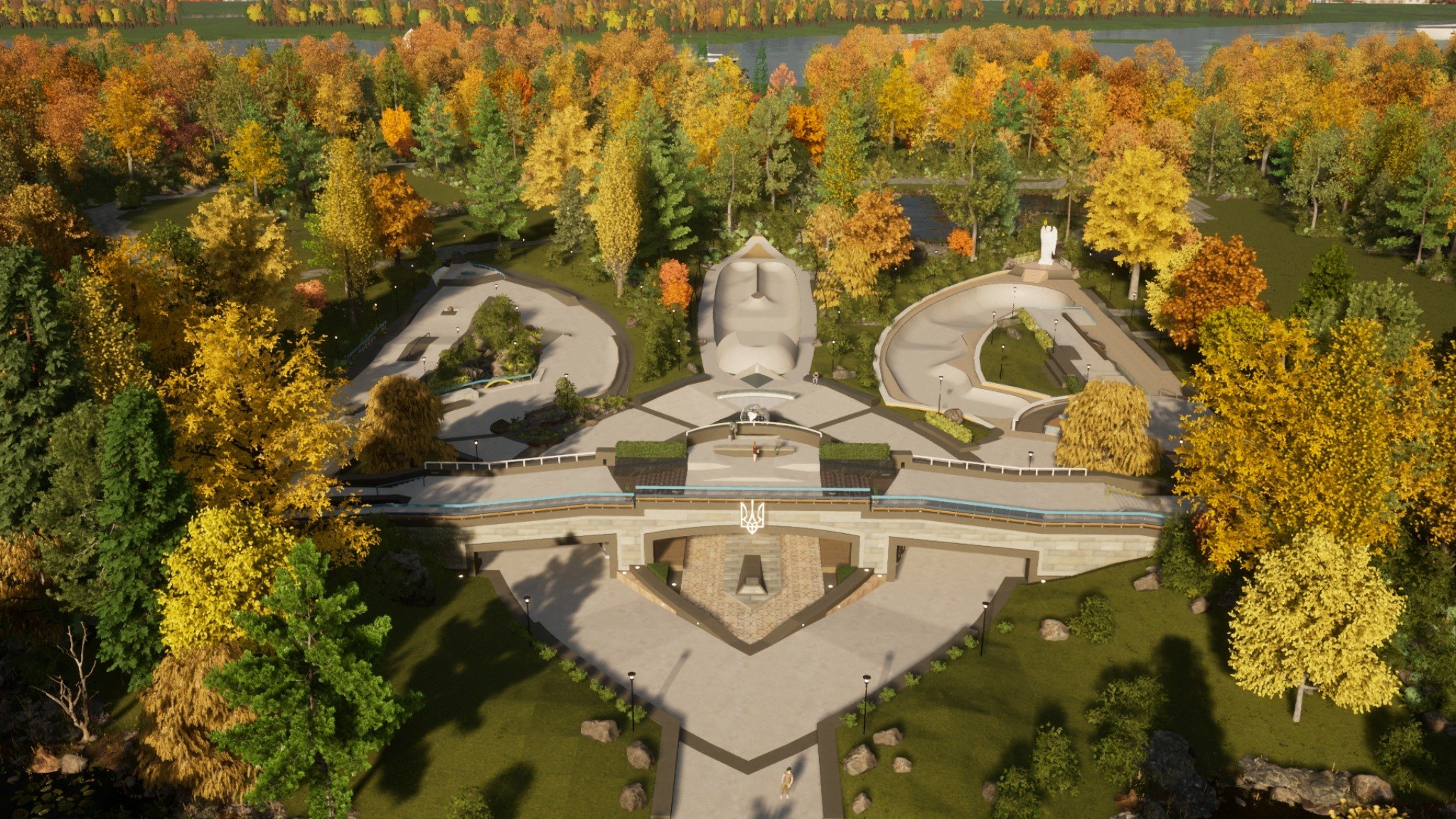
Ukraine aerial still

A different angle on the same public-space question.

The aerial view still earns its place because it shows the whole composition at once.
Ukraine aerial concept render
UkraineAerial still

Sometimes the site-plan feeling matters most.

The aerial angle strips the concept back to circulation, relation, and massing, which is often where the truth of a project shows up.

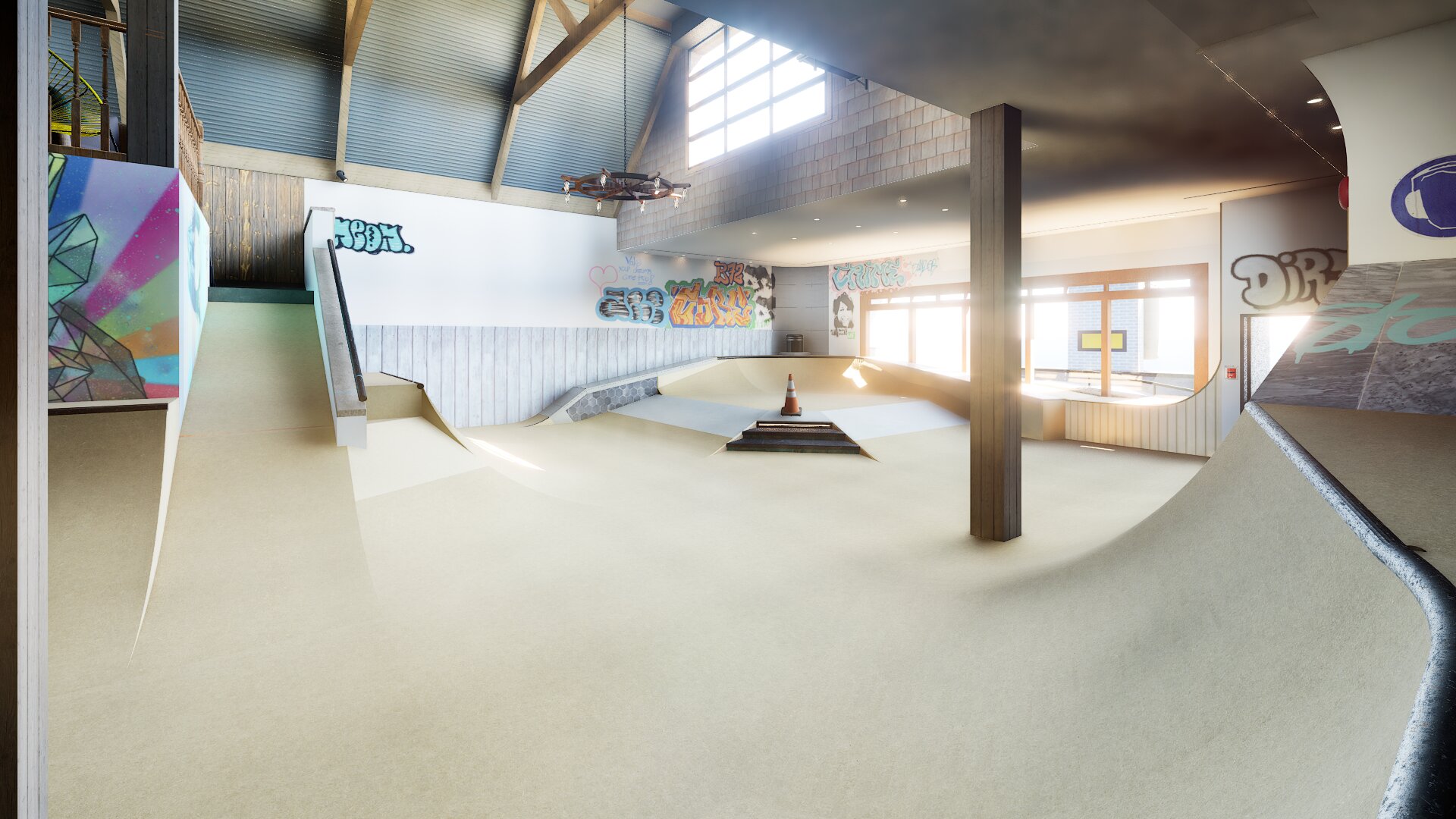
Belong Centre

Community-linked space making is still design work.

Belong sits between concept work, visual development, and hands-on support, which is exactly why it belongs here too.
Belong Centre indoor park render
Belong CentreCommunity-linked

Not every project arrives through the same door.

Belong is part concept, part visualization, part practical effort. That mix is real, and it says something honest about how these spaces come together.