01
Concept design
Early ideas for skateparks, plazas, youth space, and public-use sites that need stronger form before the process flattens them out.
This work sits in the messy stage before a good idea gets watered down. Skateparks, plazas, youth space, memorial space, and public-use concepts that need enough form, atmosphere, and clarity to survive flat presentation and cautious decision-making.
The point is simple. Make the project feel real enough that people stop speaking in abstractions and start reacting to the place itself.
Early ideas for skateparks, plazas, youth space, and public-use sites that need stronger form before the process flattens them out.
Images that show scale, mood, circulation, and what gives a place its pull.
Feedback and framing that help a project make sense to the people around it before the wrong version becomes permanent.
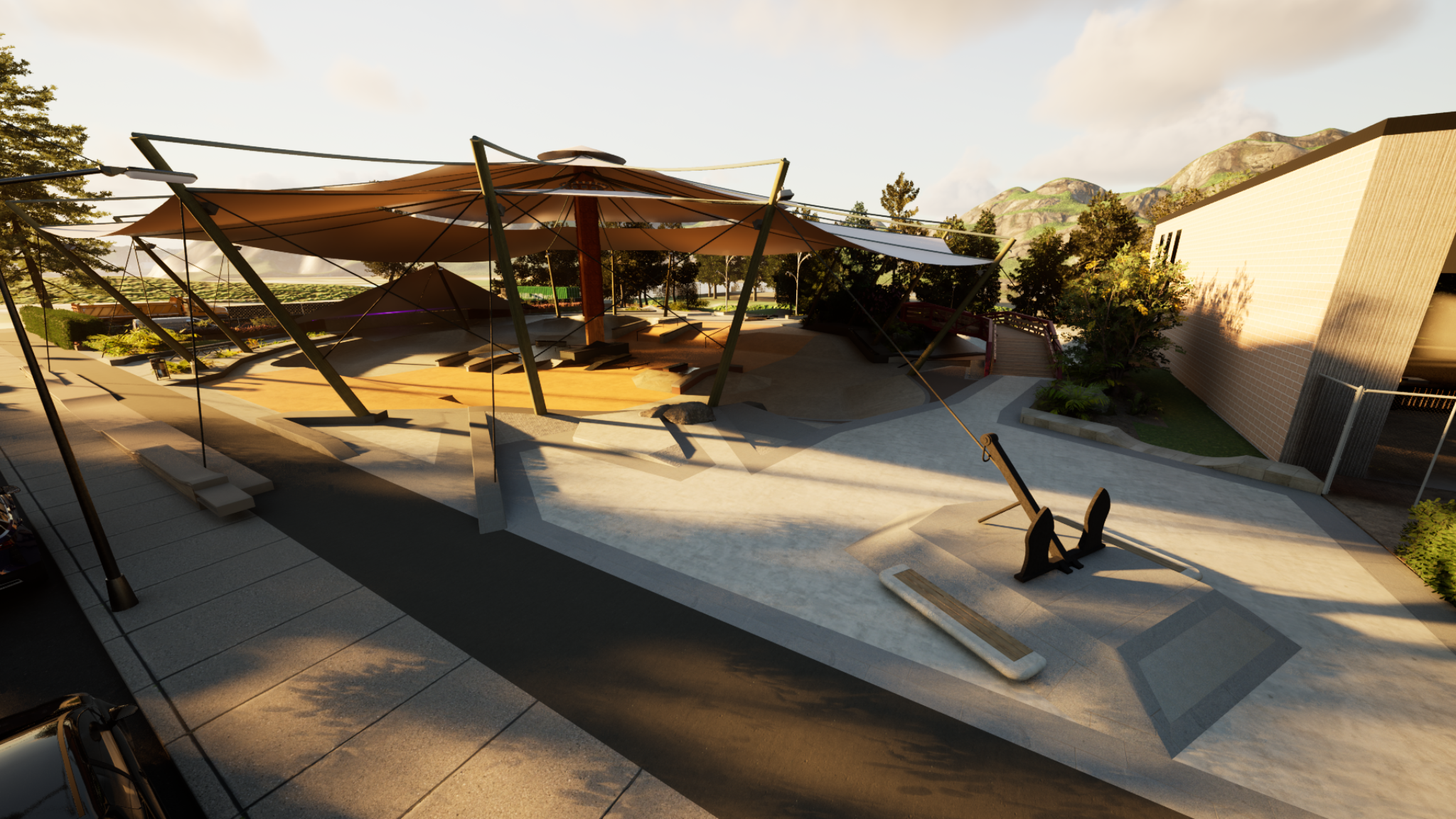
The stronger part of this project is not one obstacle. It is the overall composition. Shade, circulation, sculpture, seating, bridges, pockets of terrain, and enough open breathing room that the place does not collapse into feature spam.
It is trying to show that skate-aware design does not need to be tucked away at the edge of a site plan. It can help define the whole place.
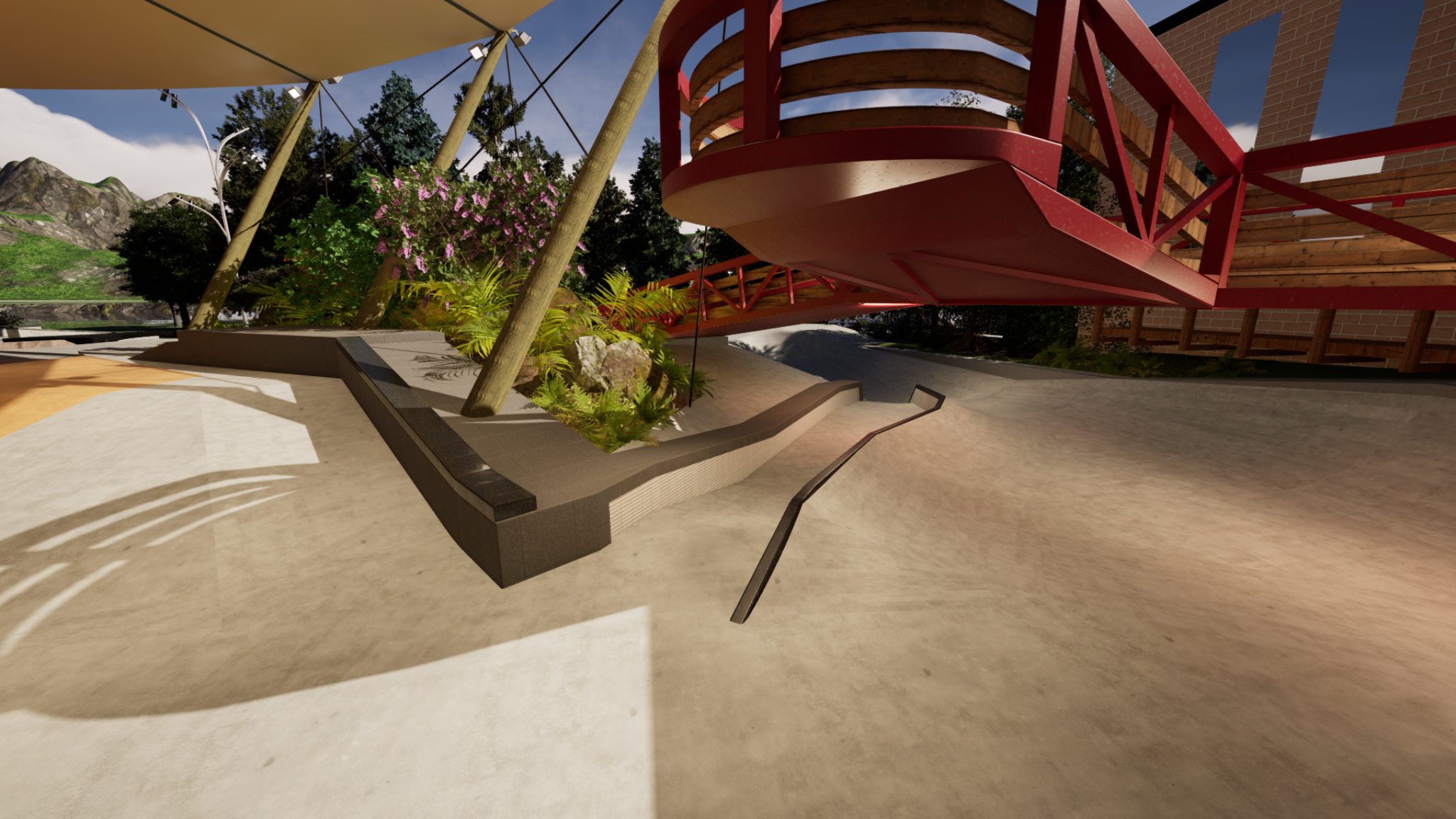
Instead of a flat pad with scattered moves, the site gets a real point to gather around. That changes how people remember it.
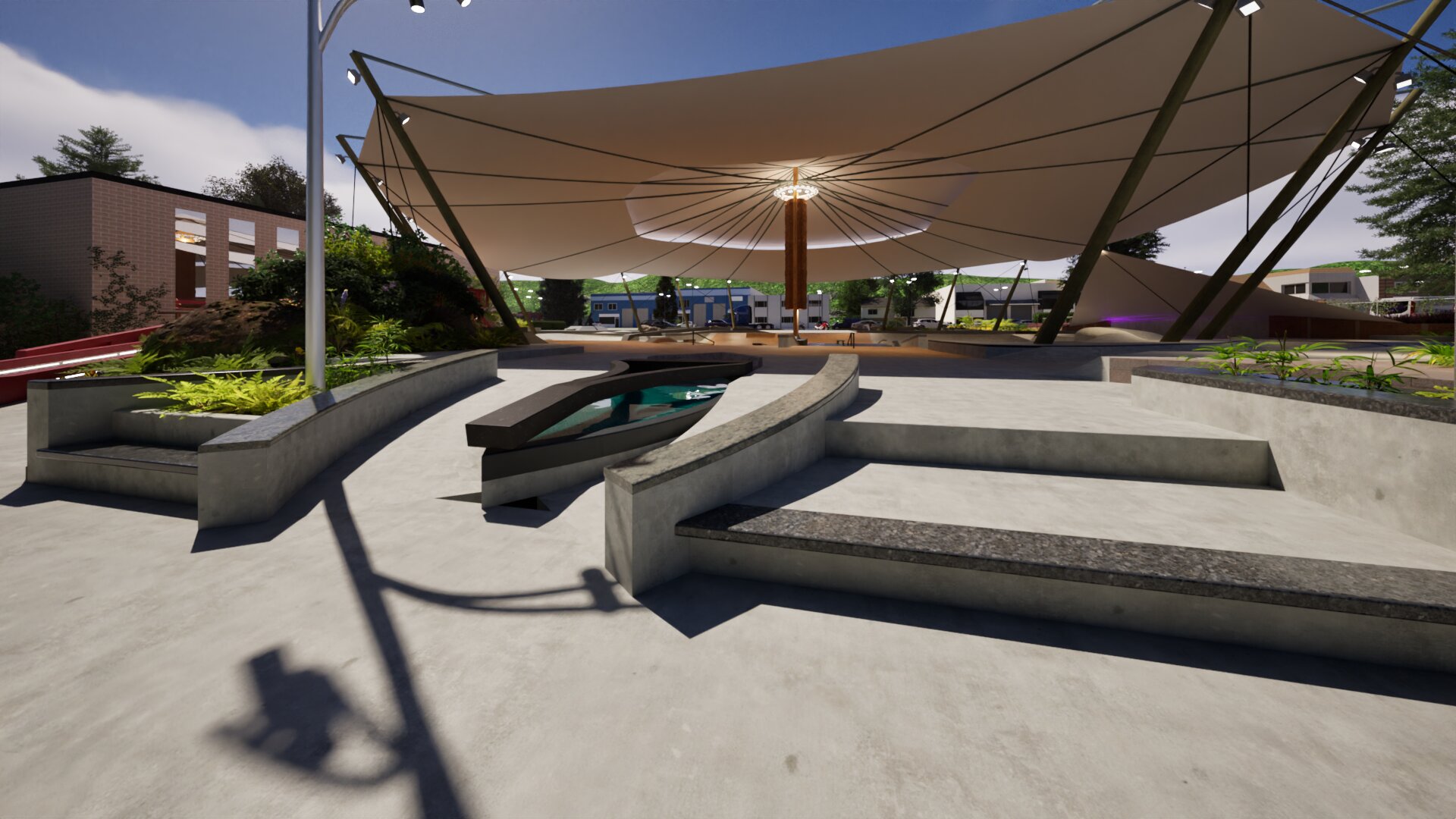
They slow people down, frame the path, and make the site usable even when nobody is skating it.
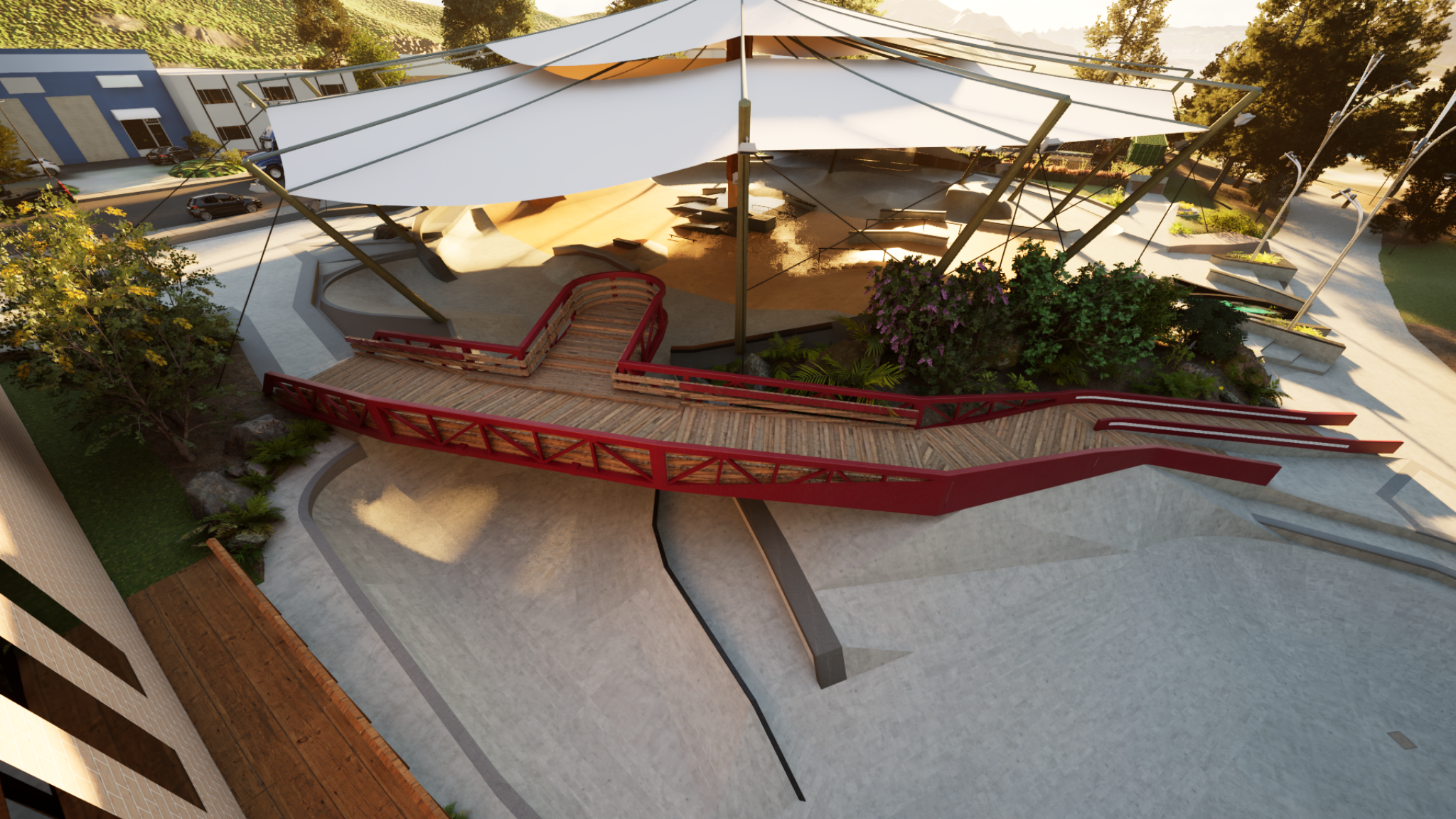
Lighting, sightlines, and surface tone all change whether a public place feels alive or hollow.
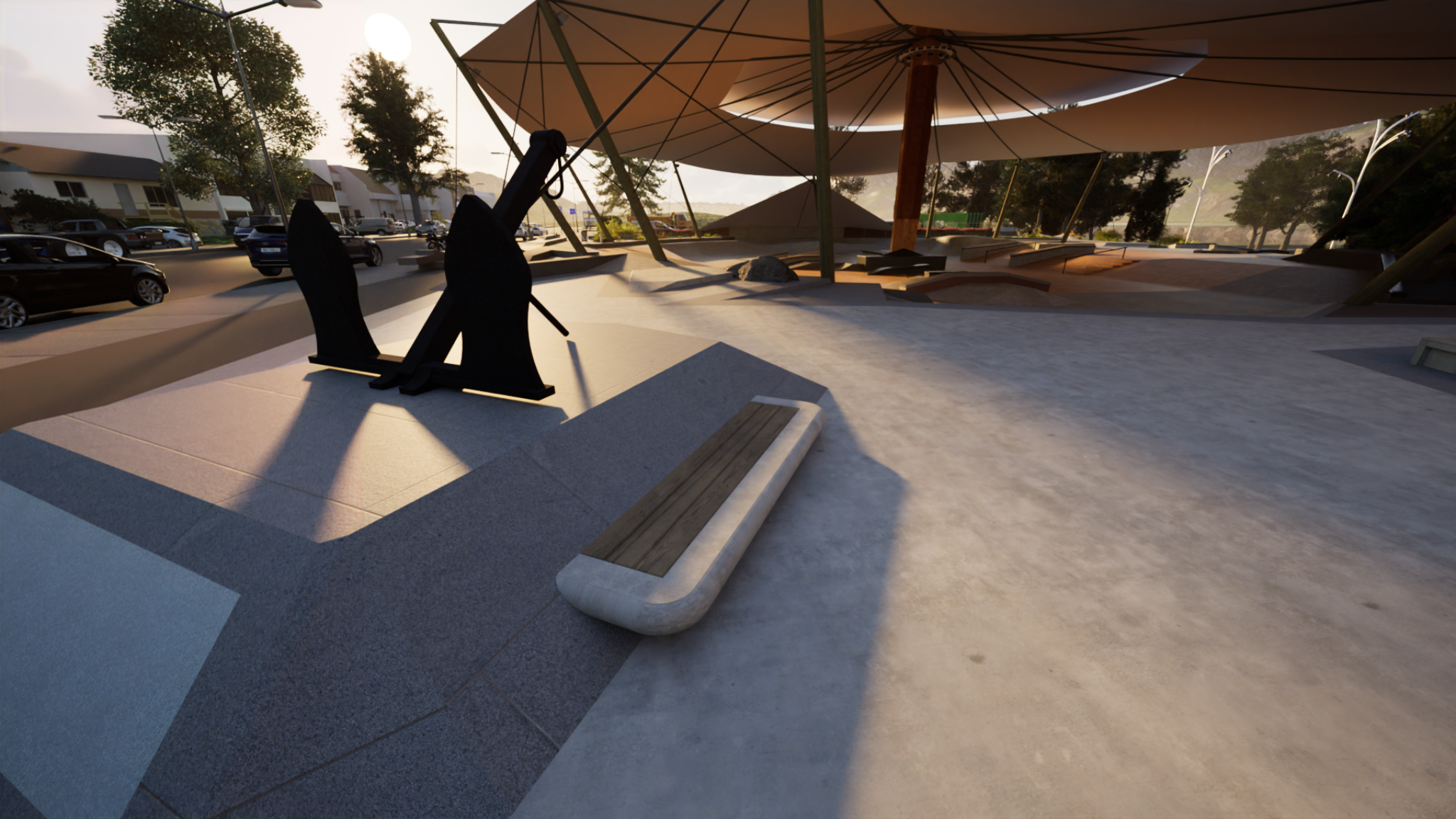
It is a route, a marker, and a sectional move all at once. That kind of decision helps a concept stay with people.
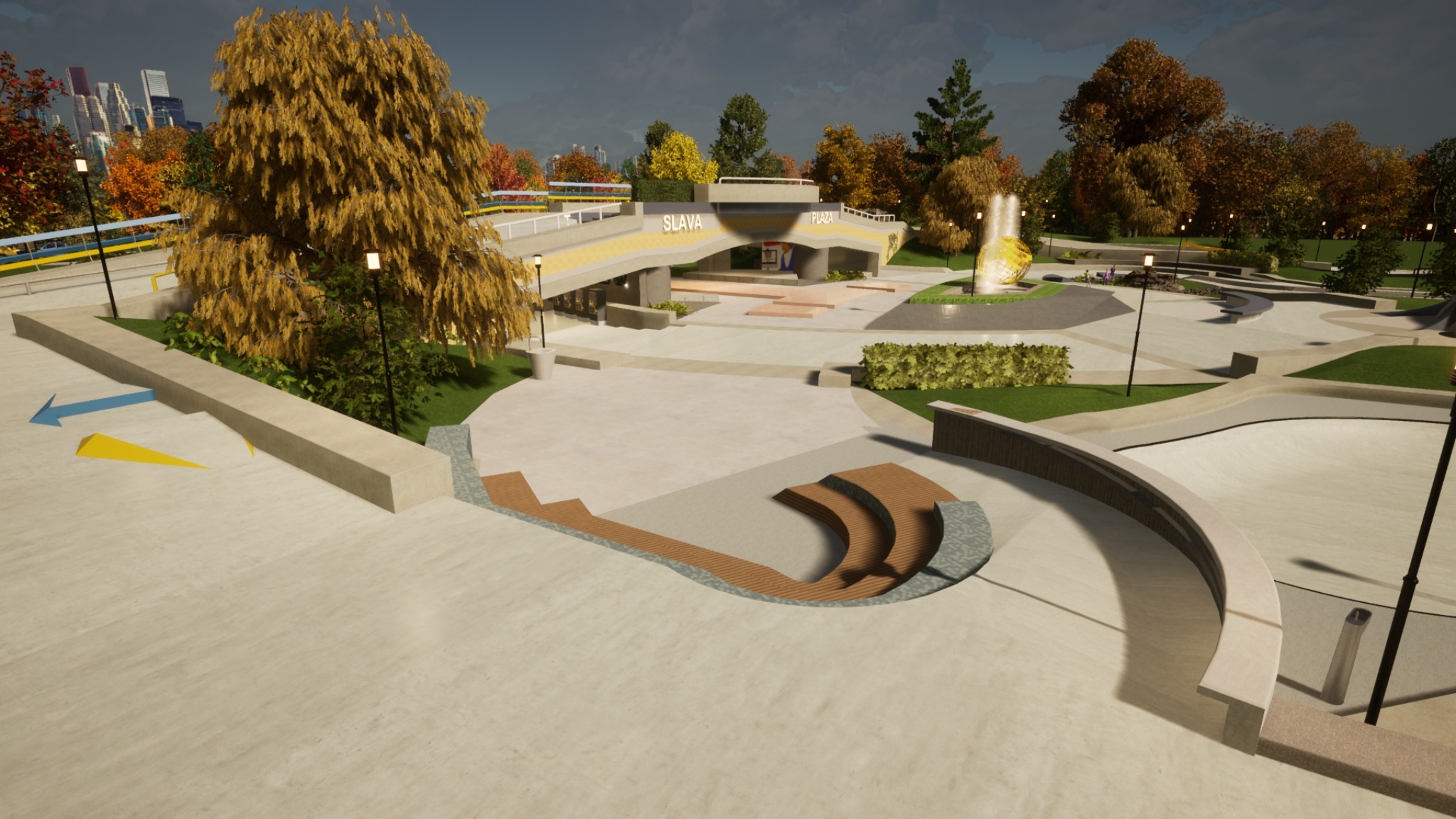
This concept is more ambitious and more delicate. It tries to hold civic meaning, movement, greenery, and skate use together without flattening the site into symbolism or separating everything into neat little zones.
The point is not to bolt skate features onto a memorial setting. It is to ask what public space looks like when grief, resilience, daily life, and youth energy all have to exist together.
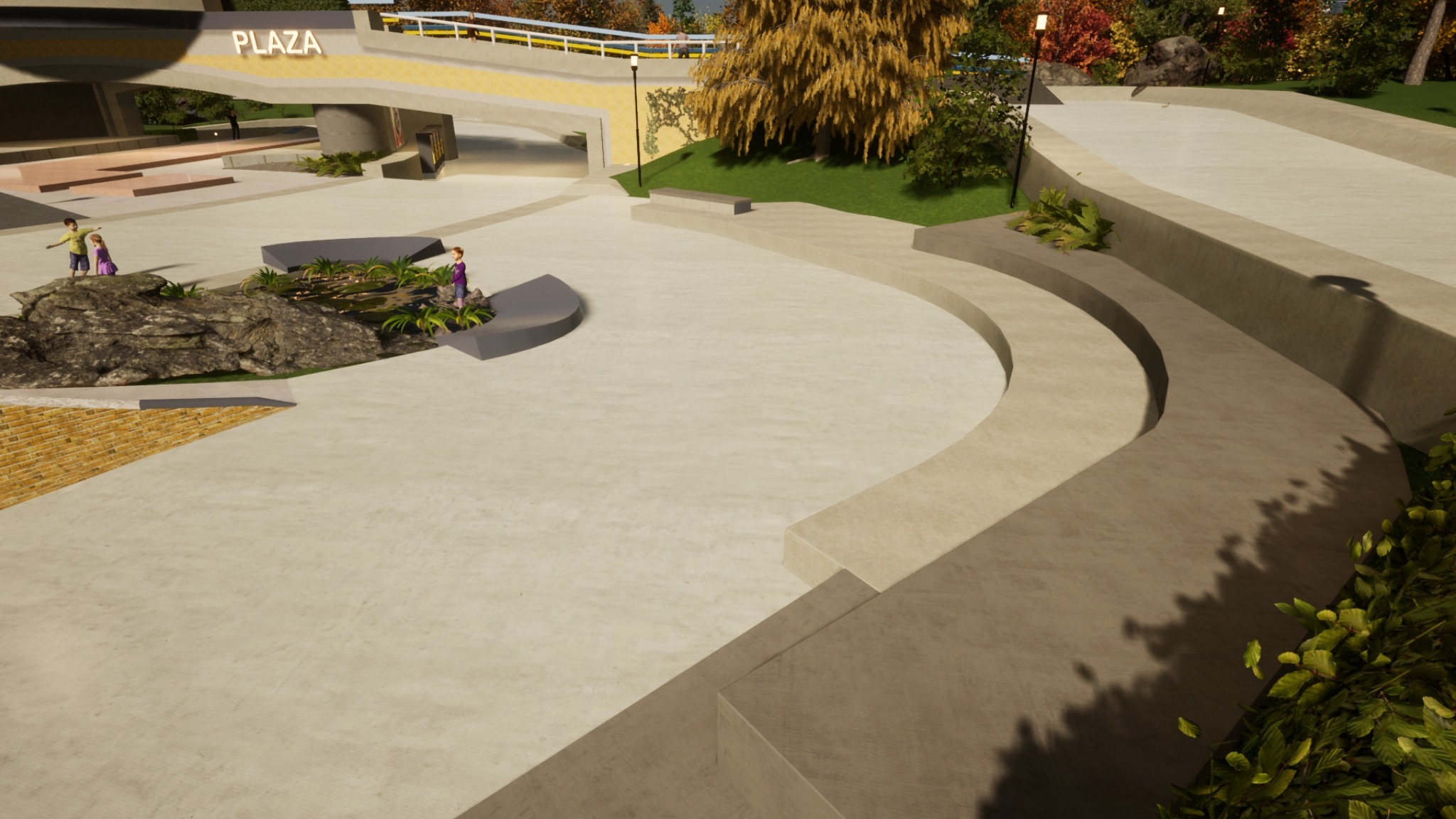
They open up room for sitting, pausing, and watching, which gives the site a calmer social layer.
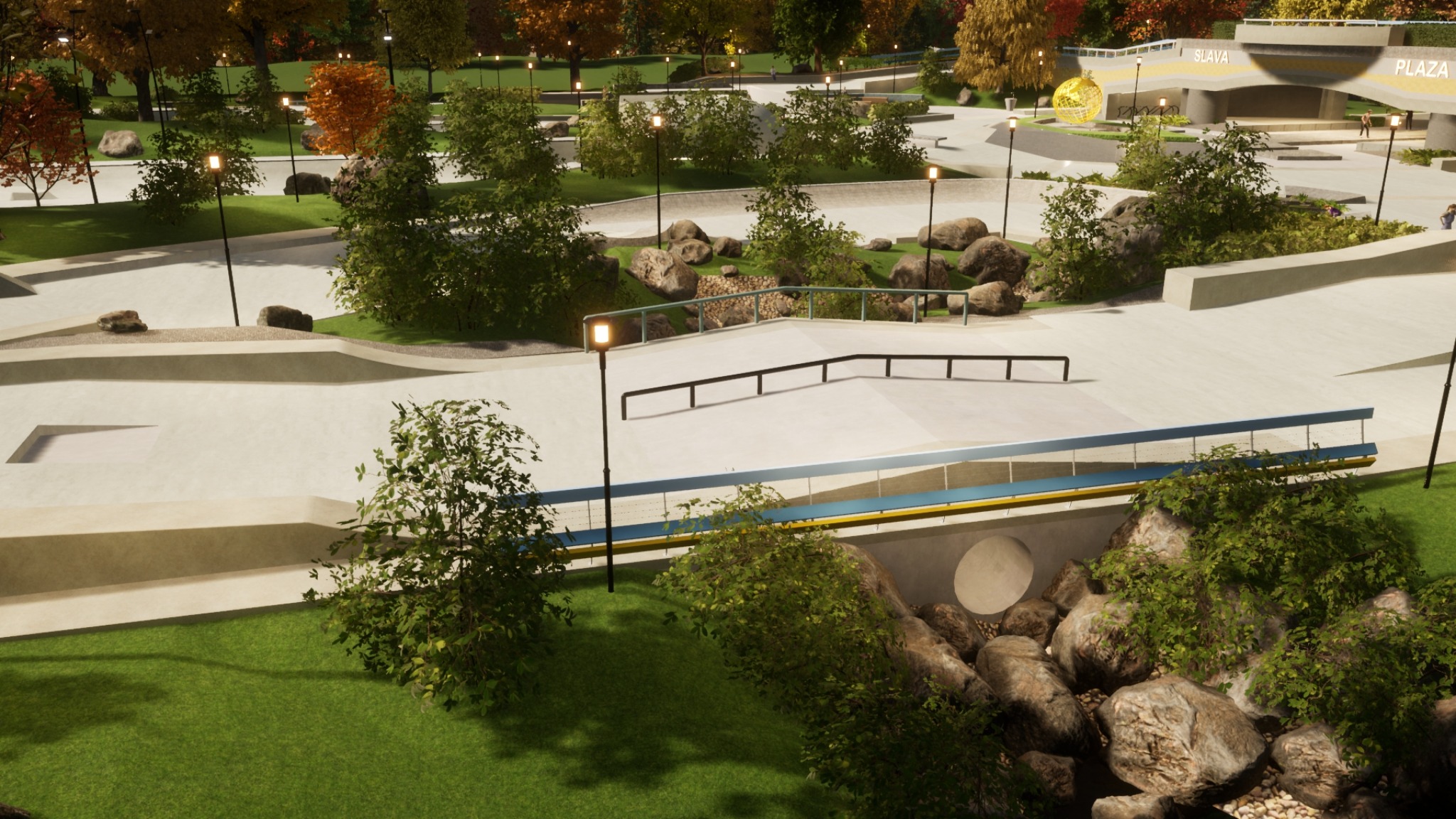
The stream crossing and rail section show how landscape and skating can sharpen each other when the details are handled with discipline.
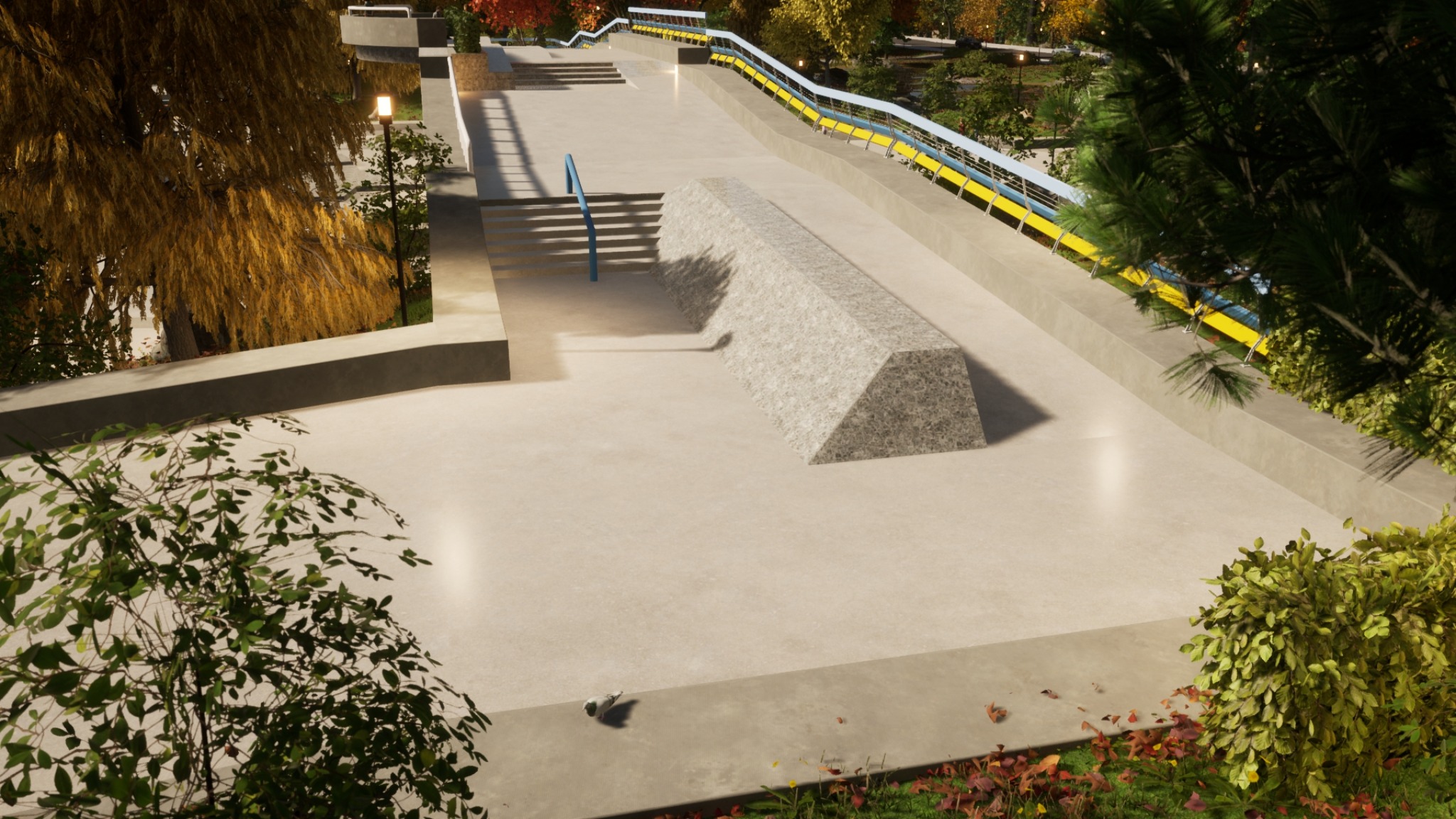
That harder geometry keeps the wider landscape from getting too soft and helps the whole site hold tension.
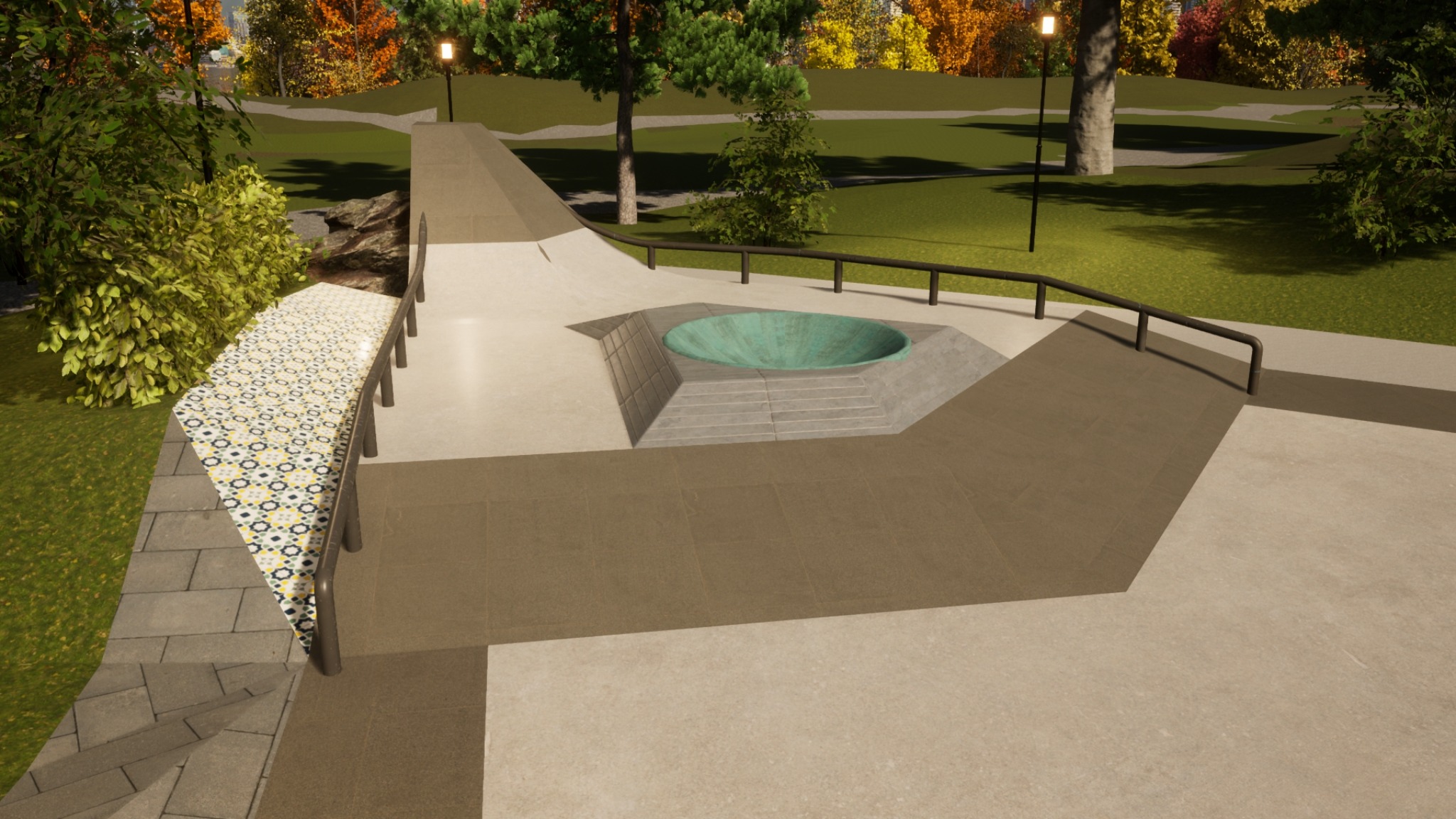
Large concepts need smaller moments of focus. They give the eye and the body something precise to lock onto.
Zambia, Botswana, Lincoln Avenue, Belong, and older pieces are still part of the picture. They live in the archive so this page can stay focused without pretending the rest disappeared.